

Teaching and Practice Phase
Intro to Overhead Squat
Intro to Sots Press
Then:
Confirmation Phase
10 x OHS (scaled to individuals ability)
20m Bear Crawl (scaled to individuals ability)
10 x Sots Press (scaled to individuals ability)
AMRAP 15 min
Then:
Max Handstand Push Ups
This mornings session is predominately a teaching lesson with a light weight confirmation which targets form rather than capacity.
For those that are familiar with the movements being taught, target capacity whilst being constantly mindful of correct form throughout the exercises.
Monday, February 28, 2011


Sunday, February 27, 2011
Military Workout Mon 28 Feb 11
Fitness Assessment
Max cadence push ups
Max unassisted cadence sit ups (maximum of 300)
Max strict heaves
Multi-stage Fitness Test (beep test)
This assessment is conducted every month, the data is collated and entered into a database to track any increases (or decreases if that is the case) in fitness amongst the troop. It tracks both individual and group fitness levels.
In addition to the fitness assessments, I have incorporated the results from training sessions into the database. This addition to estimated Max VO2, maximum anterior, posterior and core strength has allowed the ability to progressively track 1RM capacity and approximate Max VO2 capacity over various distances and modes (running, swimming, cycling and rowing).
Max cadence push ups
Max unassisted cadence sit ups (maximum of 300)
Max strict heaves
Multi-stage Fitness Test (beep test)
This assessment is conducted every month, the data is collated and entered into a database to track any increases (or decreases if that is the case) in fitness amongst the troop. It tracks both individual and group fitness levels.
In addition to the fitness assessments, I have incorporated the results from training sessions into the database. This addition to estimated Max VO2, maximum anterior, posterior and core strength has allowed the ability to progressively track 1RM capacity and approximate Max VO2 capacity over various distances and modes (running, swimming, cycling and rowing).
Tuesday, February 22, 2011
Military Workout Wed 23 Feb 11
5 Rounds of:
5 Pull Ups
10 Squat Jumps
15 Push Ups
20 Sit Ups
For Time.
Then:
Fartlek Training
5 Pull Ups
10 Squat Jumps
15 Push Ups
20 Sit Ups
For Time.
Then:
Fartlek Training
Military Workout Tue 22 Feb 11
Max Push Ups in 2 Min
Max Situps in 5 min @ 3 second cadence
Run 2.4km
Max Situps in 5 min @ 3 second cadence
Run 2.4km
Sunday, February 20, 2011
Military Workout Mon 21 Feb 11
Cardiovascular Power Session
40 Min of:
50m Swim @ max effort
then rest 90 sec.
AMRAP in 40 min.
This morning's session is designed to max out their cardiovascular systems whist remaining low impact. This is due to a fitness assessment that the squadron in conducting on Tuesday morning. The Basic Fitness Assessment is just that... BASIC. However people seemed to get nervous about them and if there is a hard session the day beforehand which will result in muscular pain, they will be upset and complain.
40 Min of:
50m Swim @ max effort
then rest 90 sec.
AMRAP in 40 min.
This morning's session is designed to max out their cardiovascular systems whist remaining low impact. This is due to a fitness assessment that the squadron in conducting on Tuesday morning. The Basic Fitness Assessment is just that... BASIC. However people seemed to get nervous about them and if there is a hard session the day beforehand which will result in muscular pain, they will be upset and complain.
Thursday, February 17, 2011
Military Workout Fri 18 Feb 11
10 x Max under water swim
1 min rest between swims
Then
Swim for 30 min.
1 min rest between swims
Then
Swim for 30 min.
Tuesday, February 15, 2011
Military Workout Wed 16 Feb 11
Interval Training
Run, Row or Ride.
Run - 400-200-400-800-200-400-200-800-400-200m
Row - 400-200-400-800-200-400-200-800-400-200m
Ride - 800-400-800-1600-400-800-400-1600-800-400m
Rest to work ratio is as follows:
800m - 1/4
400m - 1/2
200m - 1/1
The choice is for those who can not run due to medical restrictions. Most people in the group will be running.
Run, Row or Ride.
Run - 400-200-400-800-200-400-200-800-400-200m
Row - 400-200-400-800-200-400-200-800-400-200m
Ride - 800-400-800-1600-400-800-400-1600-800-400m
Rest to work ratio is as follows:
800m - 1/4
400m - 1/2
200m - 1/1
The choice is for those who can not run due to medical restrictions. Most people in the group will be running.
Monday, February 14, 2011
Military Workout Tue 15 Feb 11
Pick two exercises from both lower body and upper body. Alternate between lower and upper body exercises (all sets are to be done prior to changing exercises).
5 sets of 3 Rep Max (RM), coupled with speed component.
Lower Body – Rest 2 min between sets
Dead Lift + 10 x Squat Jumps
Back Squat + 10 x Depth Jumps
Front Squat + 10 x Jumping Lunges (each leg)
Upper Body – Rest 2 min between sets
Bench Press + 10 x Push Ups
Hang Cleans + 10 x Upright Row
Push Press + 10 x Single Arm KB High Swing (each arm)
Sunday, February 13, 2011
Military Workout Mon 14 Feb 11
Run, Row or Ride for 40 minutes.
Simple but effective. Keep the heart rate at 80 - 90 percent max HR.
The options are for those who have medical restrictions. This session will be a nice way to start an otherwise not so enjoyable week of training.
Simple but effective. Keep the heart rate at 80 - 90 percent max HR.
The options are for those who have medical restrictions. This session will be a nice way to start an otherwise not so enjoyable week of training.
Training Videos
Enjoy.
Thursday, February 10, 2011
Military Workout Fri 11 Feb 11
Fran
21-15-9
Thrusters @ 40kg
Pull ups
For time.
Military (army) PT sessions normally last 1 hour which include warm ups and cool downs. To utilise this time appropriately, this will be predominantly a teaching session. Explaining, demonstrating and practicing how to do thrusters and kipping pull ups. Fran will be their test of objectives, a brutal way of confirming what they have learn't.
One of the guy's within the troop has had surgery on his shoulder three times. As a result he has very limited range of motion and still can not support his own body weight in a overhead suspended position. He does however have sufficient anterior and posterior strength through his shoulder. Due to this, his workout will be:
5 Rounds of:
Row 400m
10 RM Bench Press
For time.
21-15-9
Thrusters @ 40kg
Pull ups
For time.
Military (army) PT sessions normally last 1 hour which include warm ups and cool downs. To utilise this time appropriately, this will be predominantly a teaching session. Explaining, demonstrating and practicing how to do thrusters and kipping pull ups. Fran will be their test of objectives, a brutal way of confirming what they have learn't.
One of the guy's within the troop has had surgery on his shoulder three times. As a result he has very limited range of motion and still can not support his own body weight in a overhead suspended position. He does however have sufficient anterior and posterior strength through his shoulder. Due to this, his workout will be:
5 Rounds of:
Row 400m
10 RM Bench Press
For time.
Pre-workout nutrition

While the current mantra among a lot of fitness trainers is “train, train, train” the truth is that you can run yourself out of a bad diet. Nutrition is 90% of the deal and the key to health and well being. Think about how much time you spend in the gym or training, maybe 3-4 hours a week of actual training? Maybe a bit more? Either way it’s a very small fraction of the 168 hours in the week. Wouldn’t you want to get the most out of that time that you can?
This is where nutrition comes into it. What you put in your body before you work out has huge consequences to your training. Let’s have a look at some pre-workout nutrition.
Timing:
The type of session you’re doing for the day will affect when your last meal before training is. On a strength day (think heavy weights, few reps, few sets, long rest) your last meal can be right before you step in the gym. If you’re a crossfitter and today is a metcon or strength and metcon day, you may want to leave it 2-4 hours between your pre-workout meal and training to allow gastric emptying so you don’t see that meal again or get stomach cramps. This will be different for everyone however and is something to play around with. I can normally eat something about 45 minutes before training no matter what I’m doing that day.
Composition:
The composition of a pre workout meal shouldn’t vary too much for most people, carbohydrates and protein making up the majority of the calories and whatever fat is in the protein making up the rest. The ratio of carbs to protein will vary depending on the type of session you’re doing but here are a few things to consider.
A meal high in protein will slow gastric emptying and possible make the session a little more uncomfortable.
A meal high in carbs, while leaving the stomach quite quickly, will also spike your insulin levels and, due to the effects of insulin on fatty acid oxidation enzymes, will not allow fat to be used as a fuel source.
This is important for a couple of reasons and will affect both strength and conditioning workouts (it’s going to get geeky sorry). During high intensity strength workouts, muscle glycogen is being used to lift the weights. After around 4-6 secs, your phsophocreatine stores have run out and glycogen takes over until the set is done. After this, your body uses fatty acids (FA) to supply fuel in your rest periods. If there is limited FA oxidation due to high insulin levels, liver glycogen must be released into the blood stream which further raises insulin levels so the glucose can be utilised by the cells.
Secondly, FA’s are used during the first couple of minutes of conditioning workouts. Once the intensity is too high, muscle and liver glycogen take over, but initially the body uses FA. If no FA’s are available then you need to start using glycogen early and face to risk of running out and hitting the wall in, say, the 15th minute of Cindy.
So what should I eat then?
A small meal consisting of some protein and carbs. Both sources should be easily digestible. Some coffee (black of course) won’t go astray either as this will enhance the FA release from your fat cells.
Any queries or questions please don't hesitate to contact us.
Tuesday, February 8, 2011
Monday, February 7, 2011
Military Workout Tue 08 Feb 11
Power Endurance:
Round 1
4 Min Stationary Cycle
Round 2
1 Min Air Squat
1 Min Dumbbell Deadlift @ 1/2 Body Weight (each hand)
1 Min Air Squat
1 Min Dumbbell Deadlift @ 1/2 Body Weight (each hand)
Round 3
4 Min Kettle Bell Swing
Round 4
1 Min Punching the Bag
1 Min Push Ups
1 Min Punching the Bag
Round 1
4 Min Stationary Cycle
Round 2
1 Min Air Squat
1 Min Dumbbell Deadlift @ 1/2 Body Weight (each hand)
1 Min Air Squat
1 Min Dumbbell Deadlift @ 1/2 Body Weight (each hand)
Round 3
4 Min Kettle Bell Swing
Round 4
1 Min Punching the Bag
1 Min Push Ups
1 Min Punching the Bag
1 Min Push Ups
Round 5
4 Min Skipping - every break results in a 10 x Squat Jump punishment
Round 6
1 Min Burpee
1 Min Man Makers @ 10kg (each hand)
1 Min Burpee
1 Min Man Makers @ 10kg (each hand)
90 sec rest between rounds.
The lads were a little worse for wear this afternoon after Monday and this morning's sessions. Most of them have just got back from Christmas leave, I observed what their normal PT sessions were like for a couple of weeks to gauge where they were at and what they had been doing for PT (and I guess what they had been doing for the six month's).
Needless to say, yesterday was a shock for them. Some of them thought it was just a welcome back session and things would go back to what they were accustomed to. This morning the reality sank in for them... The look of apprehension before I told them what was happening in their next round said everything, they were hurting... learning. I smiled.
Their efforts earn't them a recovery session.
Sleep

Sleep is a natural bodily state characterized by a lack of consciousness and inactivity of voluntary muscles. It involves an impaired ability to react to stimuli however is a period of heightened anabolism which accentuates the body’s ability to grow and repair the immune system, nervous system, muscular and skeletal systems. Sleep is an important part of anybodies life (we sleep for roughly 1/3 of our life) and allows us to maintain regular daily activity. There are massive consequences to the body and mind if a person doesn’t get enough sleep and this will be discussed further in the post.
Sleep stages
Sleep is divided into 2 broad stages; REM (rapid eye movement) sleep and non-REM sleep. Each type is distinct from each other physiologically, neutrally and psychologically. Non-REM sleep is further divided into 4 other stages and we cycle through these four stages and into REM sleep then back into non-REM sleep. REM sleep accounts for around 20-25% of total sleep and is the stage of sleep associated with memorable dreaming and atonia (paralysis during dreaming).
Our circadian rhythm, or biological clock controls our sleep-wake patterns which are controlled by hormone release. The circadian rhythm works with adenosine which is a neurotransmitter that is associated with wakefulness. Adenosine is created throughout the day with high levels of adenosine leading to sleep. In diurnal animals (day walkers), the circadian rhythm causes sleepiness by a release of melatonin that lowers the body’s core temperature. There is a gradual fluctuation of cortisol during the day which is governed by the circadian rhythm as well. Cortisol has a role in controlling sleep-wake patterns as high levels of cortisol cause a heightened sense of awareness and consciousness while low cortisol levels are associated with lower levels of consciousness.
Optimal sleep
An optimal amount of sleep is a meaningless statement unless it is looked at in relation to that person’s circadian rhythm. Even if you sleep for the “optimal” amount but it occurs at the wrong time of day for your rhythm, that sleep is ineffective. It seems that the amount of sleep needed by an individual is governed by their circadian rhythm as there are two markers that need to occur in the middle of your sleep pattern and before waking for sleep to be effective. 1) You need a maximum concentration of melatonin and 2) minimum core temperature. Human sleep can vary among individuals and a person’s sleep is considered effective if there is no day-time sleepiness or dysfunction. A lack of sleep is associated with an increased of mortality through weight gain, hypertension and Type 2 Diabetes. A person can be in a state known as sleep debt from not getting enough sleep. The larger the debt, the more severe the symptoms. Sleep debt causes mental, physical and emotional fatigue. It causes a decreased ability of the individual to perform higher level cognitive functions with the frontal lobes of the brain being particularly susceptible.
Functions of sleep
This is a hotly debated topic within the circles of sleep academia and the research is largely incomplete. After 50 years of research into sleep, William Dement said on the functions of sleep “the only reason we need to sleep that is really, really solid is because we get sleepy”. There are a few things however that have been shown to be affected by sleep such as restoration of the immune system, somatic growth of an organism and muscular repair. The immune system is weakened by a lack of sleep with white blood cell counts decreased by as much as 20% in sleep deprived mice. A lack of sleep affects the release of growth hormone in adult men, so for all you crossfitters and weightlifters out there, get some sleep or forever face mediocrity. It has also been found that sleep is inversely proportional to the size of an organism and directly related to basal metabolic rate. An animal or person with a higher metabolic rate needs more sleep than a person or animal with a lower metabolic rate.
Sleep has also been shown to affect working memory and higher level cognitive functions such as decision making and reasoning, with a lack of sleep dramatically affecting these functions. REM sleep is also associated with the processing of procedural knowledge.
Effect of food and drink
What we eat and drink have an affect our body. We all know this, which is why we stay away from certain foods and why we eat others. Sleep is just another function of our body that can be disturbed by what we put in our mouth. Alcohol is used by a lot of people to help them get to sleep but it has been associated with an increase in disrupted sleep and reduced REM sleep. Caffeine and other stimulants (including sugar, natural sweeteners and pretty much anything that contains anything ending in –ose) affect sleep by increasing the amount of insulin and cortisol in the body. When we ingest these our blood sugar rises and causes an increase in insulin. When your blood sugar drops again, cortisol is released and high levels of cortisol keep us awake, that’s what coffee’s for right? Having these things late in the day will disrupt your sleep and leave you feeling flat and in need of more stimulants.
Sunday, February 6, 2011
Military Workout Mon 07 Feb 11
5 Rounds of tabata's.
Round 1 - Rower
Round 2 - Body weight squats or push ups
Round 3 - Stationary cycle
Round 4 - Back squat, push press, bench press, shoulder press
or kettle bell swing (pick only one)
Round 5 - Nordic skier
1 minute rest between rounds.
The goal of this session is to prompt a cardiovascular response from the participants. Round four is to be conducted at light weights (no greater than 20-30kg), allowing greater repetitions which lead to increased respiratory demand and maintaining the desired outcomes.
The reason there is a choice of exercise in rounds two and four is due to injuries or medical restrictions that the participants may have, further alternative exercises are possible in rounds one, three and five if required. Programming for military personnel is difficult due to this, each workout programmed may have numerous variants all being conducted at the same time within the same session. There will be more on this in a later post.
Round 1 - Rower
Round 2 - Body weight squats or push ups
Round 3 - Stationary cycle
Round 4 - Back squat, push press, bench press, shoulder press
or kettle bell swing (pick only one)
Round 5 - Nordic skier
1 minute rest between rounds.
The goal of this session is to prompt a cardiovascular response from the participants. Round four is to be conducted at light weights (no greater than 20-30kg), allowing greater repetitions which lead to increased respiratory demand and maintaining the desired outcomes.
The reason there is a choice of exercise in rounds two and four is due to injuries or medical restrictions that the participants may have, further alternative exercises are possible in rounds one, three and five if required. Programming for military personnel is difficult due to this, each workout programmed may have numerous variants all being conducted at the same time within the same session. There will be more on this in a later post.
Wednesday, February 2, 2011
Some squat quotes
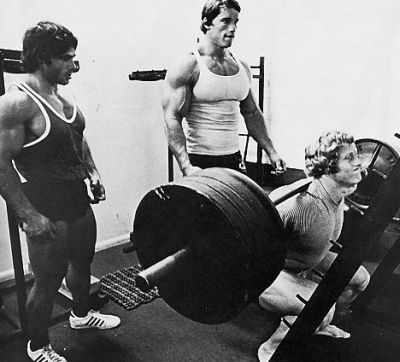
“Very few movements require the same degree of dedication, desire and determination as heavy squats. Squats are more than a physical strength builder and may be the only movement that builds a person’s character. Life is about standing up AFTER a heavy load takes you down.” – quote Dave Tate
“One of the few lifts that can cause blood, sweat and tears to leave the body at the same time – without you knowing.” –quote Dave Tate
"On resting in between reps: It varies with the length of the set. 5 reps or fewer get a breath to reset. Longer sets might take 2 breaths. During the last few reps of a true 20RM squat, just do what Jesus tells you". - Uncle Rip
"Trust me, if you do an honest 20 rep program, at some point Jesus will talk to you. On the last day of the program, he asked if he could work in". - Uncle Rip
Monday, January 31, 2011
Paleo Diet for Beginners

Wow, I hear you say, they must've had a great supplement range or heaps of carbs like today's elite athletes to do all that every day!
I hate to disappoint you but, no. Our ancestors ate a huge variety of foods depending on their location and what was available but it can be basically summarized in a few words.
They ate: Lean meat, seafood, nuts, berries, fats, vegetables, fruits... and that's about it.
Lean meat: This includes anything with a face that could run or fly away from you. Why lean meats? The meat we get today is vastly different to the meat that was hunted 100,000 years ago. That meat was free to wander around, ate nothing but what it was meant to eat and wasn't pumped full of chemicals to make it grow faster. The closest thing to that sort of meat is Kangaroo or other game meats.
Seafood: We're beginning to see the importance of seafood in our diet again. The fatty acids (FA's) found in seafood are essential FA's, which means that our body can't produce them. Without them, your body doesn't work properly, you feel crap, you then eat crap and end up as a contestant on the fattest loser. They make you feel good, both physically and mentally, as they are essential for brain growth and development as well as a whole range of physiological processes.
Nuts: Tree nuts. This doesn't include peanuts as they are a legume grown on a vine and hence have no place in the paleo diet or for proper health. tree nuts are ones that could be gathered, shelled and eaten without the need to cooking or fermenting, like legumes.
Berries: In short, berries are awesome! They are powerhouses of nutritional value and contain less fructose (a type of sugar) than normal fruit. They are also seasonal and so weren't eaten all that often.
Fats: The taboo topic. Our ancestors ate different sorts of fats. They ate nuts, oily fish and seafood and animal fat, like organ and marrow fats. Animal fat in particular is a hugely rich source of nutrients like vitamins A, D, E, and K (fat soluble so they're not found elsewhere). This was an important part of our ancestors diet as it gave them the energy they needed to chase down or gather the next day's meal. Saturated fat, that has been successfully daemonised by our 'public health' advocates is not bad for you, eat away.
Vegetables: Remember the green leafy things that grow in the ground? Lettuce, spinach, broccoli, cauliflower, asparagus just to name a few. There is evidence that our ancestors ate some roots and tubers like carrots and sweet potatoes (not normal potatoes) when they were able but this wasn't an everyday thing.
Fruits: Fruits are a seasonal plant and so weren't eaten all the time. When they were it was in small quantities as the fruit we get now is vastly different to the fruit from 100,000 years ago. Again this is to be used sparingly.
And that about covers it. They ate real foods, unprocessed and as fresh as you can get. These are the foods that are good for you and are the reason we are here today.
If you'd like any more information, don't forget about our nutritional counselling. If you really want to geek out on this stuff we can certainly do that too!
Friday, January 28, 2011
Trigger Points

Trigger points occur when paired muscles become hypersensitive and irritated and form a 'knot' in a tight band of muscle. There are approximately 200 paired muscles that can form trigger points, the trapezius of the upper back being a common example. These muscles form a tight rope like structure, ofter very painful and tender to touch and can cause referred pain in neighbouring areas.
Another example of a trigger point is the gluteus minimus of the hip girdle which can cause shooting pain down the leg to the ankle. This can be mistaken for sciatic nerve pain. As a lot of trigger points have referred pain a long distance from the actual trigger point they are often mis-diagnosed as local irritation or nerve compression syndromes, such as sciatica, carpel tunnel and pinched spinal nerves. Headaches, neck and upper back pain and plantar fasciitis are other common examples of discomfort that can be caused by untreated trigger points.
What causes trigger points? A number of factors can all contribute to the formation of a trigger point. Acute actions such as a muscle strain, or whiplash can cause a trigger point by causing the muscles to tighten and spasm. Chronic overload of the posture muscles used to maintain incorrect posture during work or sleep can also cause trigger points, as can low impact repetitive muscle movements over a sustained period. Muscular imbalances caused by this incorrect posture or incorrect sequence of muscle contraction is also a major factor in the formation of trigger points.
So what can be done to avoid these trigger points? Self myofascial release is the easiest (albeit very painful) way to relieve the effects of trigger points. The muscle fibres must be broken apart and allowed to glide over one another to be able to move correctly. This can be done with a foam roller, massage or small hard balls to increase pressure and blood flow to the area. That's all well and good but where are the trigger points? As part of our new restoration sessions we'll show you the most effective trigger points to relieve the most common pain from trigger points and explain exactly how this trigger point will impact you if it flares up again.
Call or email now to book a session with Alex and get you on the road to recovery.
Thursday, January 27, 2011
Restoration Sessions are now available!

Do you have a tight lower back?
Sore knees or shoulders?
Just want to improve your squat?
Chances are that you have some mobility and muscular imbalance issues that are killing your potential.
Shire Strength and Conditioning are now offering Restoration Sessions to compliment your training and keep you injury free. We can work on specific areas or your whole body using a combination of trigger point, massage and band therapy to get you moving well and feeling great.
Single sessions are $40 for 30 mins, or buy 4 and get the 5th session free, we'll even throw in a foam roller.
Call or email now to book your sessions with Alex
Don't forget about our nutritional counselling as well.
Monday, January 24, 2011
Restoration Classes coming soon!

How many of you have been at the peak of your training only have a niggly injury stop you from doing some of the most basic exercises? I certainly have. Going too hard too early or going too long without a break can do some serious damage to your body that will build up over time and stop you doing the things you love.
Training hard and eating well are only part of the equation. If your body can only take so much before it will start to break down. That annoying pain in the shoulder or lower back are a sign that your body either needs to take a break or get some maintenance, quick!
The restoration classes I will be offering will only take 30 mins of your time and take methods from massage, trigger point and band therapy to keep your body in top notch condition all the time.
There will be more information coming in the next couple of days.
I also offer nutrition information. 2 x 30-40 min sessions over 2 weeks for $80 to take your diet to the next level. For the Crossfitter's out there, the sectionals are coming up and this is the perfect time to dial in your diet.
Friday, January 21, 2011
Injury and recovery
I found out on Monday the other problem with taking a break from training and trying to go back into a max effort day, injury. Whilst attempting my CFT I pulled my TFL and hamstring. I didn't notice it at the time but tuesday it was killing me!
I have found the value of trigger point therapy for injury recovery as well. TP is fantastic at keeping your body working properly but for injury recovery it has helped beyond my expectation, it hurt like hell but 3 days later my hip is almost fully recovered.
Workout:
3 x 15 hip ext
3 x 15 abmat situps
3 x 6 weighted pullups
5 x 2 power cleans @ 75% of 1 RM
Monday, January 17, 2011
Ok, it's been a while since I've been on, exams, holidays and more holidays will do that to you.
It was my first day back at the gym today after around 3 weeks of inconsistant training (if you can call it that) and a lot of food during the festive season and on holidays around NZ. At the end of last year I needed a break, I was tired and run down and it was fantastic to get away from the gym for a while. Today showed me however, what happens after 3 weeks off. You lose your edge.
The end of last year bought great strength gains for me and I thought that after a bit of a refresher I would still be back where I was. This was not to be however. Imagine my disgust when I lost 20kg off my squat and 30 off my deadlift. My press stayed the same though (?). This was the first of my test days before I start another strength cycle and I was not impressed. On Wed I'm testing front squat, bench press and sumo deadlift and friday will be snatch and clean and jerk. It will be interesting to see what those numbers are.
Workout:
"Crossfit total"
3 attempts at each lift to find you 1 rep max
Back squat, strict press, deadlift
Post weights to comments
Sunday, October 31, 2010
So, I've just come back from the gym after my second attempt at a 20RM back squat. Again, the weight was 120kg as I was so close on Friday (18 reps). I thought I'd be fine this afternoon as, on Friday I trained in the morning which I don't normally do. Anyway, 19 reps later my lower back decide not to work and I dumped the bar on the way up on my 20th rep.
One thing these sort of workouts highlight is any weak areas of your form or musculature. I found today my lower back to be the problem area. My hips and legs were fine, even my upper back wasn't as bad as Friday morning but my lower back was screaming after 10 reps and gone on the 19th.
I now know a weak area however and this gives me the opportunity to address this before the next competition on 4/5 December.
Post your weaknesses (or areas you're not happy with) to the comments.
Here's some box squats for you, comments are welcome...
Friday, October 29, 2010
Wow, I'd forgotten what a no shit set of 20 back squats feels like. The last time I did a 20RM was a couple of months ago and I got it out at 100kg. I've been reading about a lot of old school lifters and athletes and the common theme is take your 5RM deduct 40 pounds and go for 20 reps. So, roughly, 5 RM 140kg - 20kg (about 40 pounds) = 120kg for 20 reps.
I can squat 5 to 10 with 120 pretty well (not easily) so I thought it's a good starting weight. 12 reps in I was going alright reps 13-18 I started getting a tingling sensation in my calves and glutes and started redding out. I went for the 19th reps and collapsed at the bottom position... then fell forward then couldn't stand up for a good few minutes.
Even though it's the same response to a short metcon (like fran), the lactic acid is lowering the pH of your body and interrupting the normal workings of... well everything, it felt completely different. I was basically numb for about 10 minutes before I felt like I could function again.
So, why do this? Because this gets you STRONG! The hormonal response, the release of HGH and increased insulin sensitivity are enough but for me, the main component of this is metal training, the ability to get under a heavy weight even when you're already buggered and seeing stars, just for 1 more rep... then another... then another.
Here's an except from Starting Strength author Mark Rippetoe:
"Ball Busters', Widow-Makers, Man Breakers. These are words used to describe the 20 rep squat. But back in the golden age of bodybuilding, before expensive supplements and better living through chemistry, this is how the old school weight lifters got BIG. If you can suffer though the 6 weeks that it takes to get through this routine you will grow bigger legs and even bigger balls. Mark Rippetoe says, "Trust me, if you do an honest 20 rep program, at some point Jesus will talk to you. On the last day of the program, he asked if he could work in." Don't say I didn't warn you"
Workout:
20 RM back squat
Post weight and responses to comments.
On a lighter note, here's a video of me power snatching. Any comments are welcome.
Tuesday, October 26, 2010
Bootcamp update:
Likely dates at this stage will be 22/11/10 - 17/12/10 inclusive.
The classes will be held three days a week, Monday/Wednesday/Friday or if there's enough interest Tuesday/Thursday/Saturday.
$200 for the 4 weeks (12 sessions at $16.67 per class)
There is a minimum of 10 people so get you friends/workmates/associates or that strange guy that hangs around the bus stop and give me a call or email or leave a comment, the details are on the side bar.
Workout 25/10/10
Front squat - 3,3,3,3,3 (go up in weight each set)
Then:
5 rounds
1 min farmers walk, 1 min rest
Then:
10 x 40 m sprints, rest 30 secs between efforts
Post weights and times to comments.
Saturday, October 23, 2010

Thursday, October 21, 2010

Wednesday, October 20, 2010

Bootcamps will be starting up soon! Mon, Wed, Fri down at 6am-7am, Brighton-Le-Sands opposite the Pavilion. We need a minimum of 10 people to run them so bring your friends down and get fit for summer together!
If there's enough interest we'll start them on Tues, Thurs, Sat as well at the same time.
Leave a comment if you're interested in coming down and when there's enough people we'll get in contact with you to organise the first 4 weeks.
We look forward to hearing from you
It's been a while!
Crazy time of the year for us here at SS+C and it's meant a neglected website... but not for long! Regular post will start up again this week and we'll throw some insights and musings at you too.
Workout:
"Welcome back!"
4 rounds for time:
max rep pushups
max rep strict pullups
15 situps
250m row
Post time and reps to comments.
Wednesday, September 8, 2010
Monday, September 6, 2010
Sunday, September 5, 2010
Monday, August 30, 2010
Sunday, August 29, 2010
Friday, August 27, 2010
Wednesday, August 25, 2010
Monday, August 23, 2010
Sunday, August 22, 2010

Saturday, August 21, 2010
Thursday, August 19, 2010
Wednesday, August 18, 2010

Tuesday, August 17, 2010
Sunday, August 15, 2010
One arm KB snatch LH @ 24kg - 30 secs
30 secs rest
One arm KB snatch RH @ 24kg - 30 secs
30 secs rest
Pullups - 30 secs
30 secs rest
box jumps @ 60 cm - 30 secs
30 secs rest
4 rounds for reps
Post total reps to comments
Found this the other day too, Dave Lipson is going to squat 200kg every day! Dedicated to fellow crossfitter Amanda Miller amandaredmiller.blogspot.com
Check it out http://365daysofsquatting.blogspot.com/
Saturday, August 14, 2010
Thursday, August 12, 2010
Wednesday, August 11, 2010
Tuesday, August 10, 2010

Monday, August 9, 2010
Sunday, August 8, 2010

Saturday, August 7, 2010

I'm going to start posting a daily workout, pretty similar to what I do each day. There will be scalings for people who can't do or don't know what the movement is and I'll answer any comments that fired at me too.
So for today:
Weighted Pull Up 3 x max rep @ 30% of body weight (or no weight, or on bands)
Then:
As many rounds in 12 mins (AMRAP 12 mins)
5 shoulder to overhead @ 80 kg (scale to appropriate weight)
10 pushups (or pushups on knees)
15 hip extensions (or squats)
Post number of rounds completed to comments.
A few more sites that I check out regularly:
www.crossfitfx.com
www.cathletics.com
www.optimumperformancetraining.blogspot.com
A few more tomorrow.
Subscribe to:
Posts (Atom)

